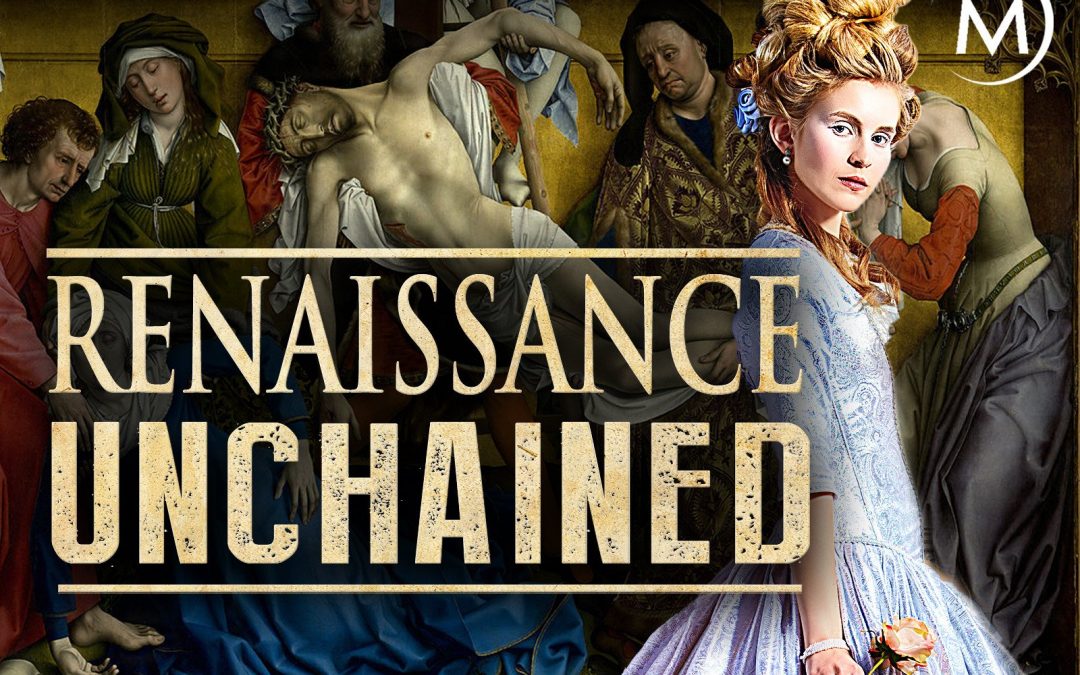
In ‘The Renaissance Unchained’, art historian Waldemar Januszczak challenges conventional wisdom on European art’s golden period.
I have always maintained that pigs would fly when I learn to draw. Have thus far been indifferent to art, and scornful of modern ‘art’. Waldemar Januszczak’s ‘ The Renaissance unchained‘, streaming on Amazon Prime, changed my mindset and how.
Complex and cheeky
The four-part series has a central theme, to prove that the cultural renaissance occurring in Europe from the 14th to the 17th centuries was not a miraculous age of enlightenment.
It was, much like Januszczak himself, erratic, eccentric and layered in meanings.
Dark motifs co-exist with biblical themes. Mona Lisa’s mysterious smile contrasts with the innocence of cherubs
We move from the sombre Day of Divine Judgement at The Sistine Chapel to Venice’s Bridge of Tits (prostitutes were paid to go topless to convert homosexuals!)
There is the rampant erotic eccentricity of art commissioned by Rudolf III in Prague. And then we come into the evocative 3D world of Arcimboldo’s ‘Mannerism’ school of painting.
Bottomline. It was not Italy alone that cradled the Renaissance. Belgian, Dutch, and German masters have come up with earlier and even better works. For every Leonardo, Raphael, Michaelangelo, Botticelli, there is a Van Eyck, Memling, and Van der Wyden.
Southern Art v/s Northern Art
While Italian art comes across as mostly religious and grand in its sweep, Northern European art is more muted. The latter focuses more on faces rather than themes. There is a beautiful interplay between light and shadow; mood and subtlety.
Ultimately, it’s all a matter of perspective.
Must watch even if you aren’t an art buff! You get a tour of the most beautiful parts of Europe, an engrossing re-interpretation of history, and plenty of witty banter.
If you found this interesting, stay connected here

Recent Comments